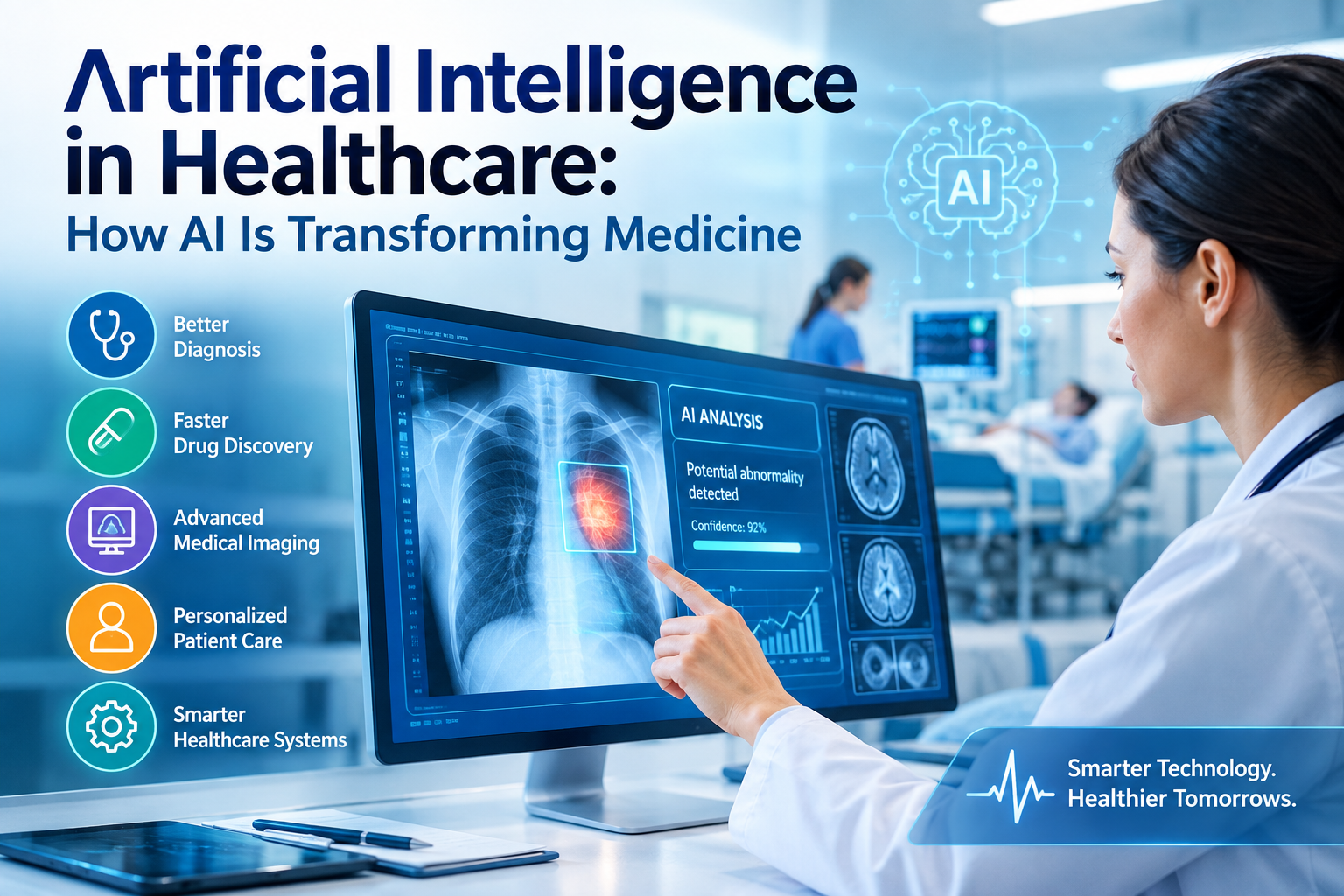
Artificial intelligence is changing healthcare from the way doctors analyze medical images to how hospitals manage records, identify risks, develop medicines, and communicate with patients. Its impact is moving from theory into everyday healthcare in the United States.
The growth of artificial intelligence in healthcare is being driven by better machine learning models, larger medical datasets, cloud computing, advanced imaging systems, natural language processing, and generative AI. These technologies can process enormous amounts of information and identify patterns that may be difficult to detect through traditional methods alone.
The transformation is already visible. The U.S. Food and Drug Administration (FDA) maintains a growing list of AI-enabled medical devices authorized for marketing in the United States. The agency reported that more than 1,600 AI-enabled medical devices had been authorized as of September 2026, covering areas such as radiology, cardiovascular care, neurology, pathology, surgery, and other specialties.
At the same time, physicians are adopting AI for practical tasks. An American Medical Association survey found that 66% of physicians surveyed reported using healthcare AI in 2024, including tools for documentation, care planning, translation, and assistive diagnosis.
But the growth in medicine isn’t simply about replacing existing medical processes with software. The bigger opportunity is to build healthcare systems where clinicians can use intelligent tools to analyze information, make better-informed decisions, reduce administrative workloads, and provide more personalized care.
This article examines how healthcare AI works, where it is being used today, the benefits and challenges involved, and what the future of AI in healthcare could look like in the United States.
What Is Artificial Intelligence in Healthcare?
Artificial intelligence in healthcare refers to using AI technologies to perform or support tasks that normally require human intelligence.
These tasks can include recognizing patterns in medical images, predicting clinical risks, processing medical records, summarizing information, supporting diagnosis, discovering potential drug candidates, and assisting healthcare professionals with administrative work.
AI is a broad field. In healthcare, several technologies are particularly important.
Machine Learning
Machine learning in healthcare allows computer systems to learn patterns from data rather than relying only on manually programmed rules.
For example, a machine learning model can be trained using large collections of medical images and associated clinical information. After training, the model can analyze new images and identify patterns associated with a particular condition.
Deep Learning
Deep learning is a type of machine learning that uses multi-layer neural networks. It has become especially important for image-based applications such as radiology, pathology, dermatology, and ophthalmology.
Natural Language Processing
Natural language processing, or NLP, enables computers to process human language. In healthcare, NLP can analyze clinical notes, summarize records, extract information from documents, and support medical documentation.
Generative AI
Generative AI in healthcare refers to models that can produce new content, such as text, summaries, explanations, draft documentation, or other outputs.
Generative AI can assist with tasks such as summarizing patient information, drafting clinical notes, organizing information, and supporting patient communication. However, generated content still requires appropriate human review because AI systems can produce inaccurate or incomplete information.
Computer Vision
Computer vision enables AI systems to interpret visual information. In healthcare, this can include X-rays, CT scans, MRI images, ultrasound images, photographs of skin lesions, retinal images, and pathology slides.
Together, these technologies form the foundation of modern medical AI. Next, we will look at how AI is changing medicine in the United States.
How AI Is Changing Medicine in the United States
AI’s impact isn’t limited to one area of healthcare. It is being explored and deployed across diagnosis, treatment, research, medical imaging, drug development, administration, monitoring, and patient support.
The FDA specifically notes that AI-enabled devices are being developed for earlier disease detection and diagnosis, personalized diagnostics and therapeutics, device usability, and patient and user experiences.
That means AI is increasingly becoming part of the healthcare infrastructure rather than remaining an experimental technology.
AI Diagnosis: Supporting Faster and More Informed Decisions
One of the most discussed AI applications is AI diagnosis.
Doctors often need to consider large amounts of information before reaching a diagnosis. A patient’s symptoms, medical history, laboratory results, medications, imaging studies, and other clinical information may all affect a decision.
AI can help organize and analyze some of these data sources.
For instance, an AI system may identify a suspicious pattern in an image and highlight it for a radiologist. Another system may analyze physiological information and identify a pattern associated with elevated risk.
The important point is that AI-supported diagnosis does not automatically mean an autonomous diagnosis. Instead, many healthcare AI tools are designed to assist clinicians rather than make final decisions independently.
The FDA’s AI-enabled medical device list includes numerous systems designed to provide diagnostic or decision-support functions across medical specialties.
Earlier Disease Detection
Early detection can be particularly valuable in conditions where treatment outcomes may depend on identifying disease before it becomes more advanced.
AI may help identify subtle patterns in medical data, allowing clinicians to focus on areas that require further evaluation.
In cancer care, for example, researchers are exploring and using AI for screening, diagnosis, treatment planning, and research. The National Cancer Institute describes AI as a technology that can help with cancer screening and diagnosis and can also support research and drug discovery.
However, performance varies by system, disease, population, and clinical setting. So a model that performs well in one dataset may not perform equally well when deployed in another environment.
AI Medical Imaging Is One of the Most Advanced Applications
AI medical imaging is one of the strongest examples of how artificial intelligence is entering clinical practice.
Medical imaging produces enormous amounts of visual information. Radiologists and other specialists must interpret X-rays, CT scans, MRI studies, ultrasound images, mammograms, and other examinations.
AI can assist by identifying patterns, measuring structures, improving image quality, prioritization cases, or highlighting findings that deserve closer review.
The FDA’s current list includes many AI-enabled radiology devices, underscoring the importance of medical imaging in the U.S. AI ecosystem.
Potential applications include:
- Detecting abnormalities in X-rays and CT scans
- Supporting mammography interpretation
- Measuring tumours or anatomical structures
- Improving image reconstruction
- Identifying findings that may require urgent attention
- Assisting treatment planning
- Supporting image segmentation
AI can also help improve workflow. If an imaging system can automatically identify a potential urgent finding and move that examination higher in a work queue, clinicians may be able to review certain cases sooner.
Still, AI should be evaluated in the context of the complete clinical workflow. Otherwise, high performance in an isolated technical test does not automatically guarantee better patient outcomes in a hospital.
AI in Medical Research and Drug Discovery
Another major area is AI drug discovery.
Traditional drug development is complex, expensive, and time-consuming. Researchers must identify promising biological targets, discover or design compounds, evaluate their properties, study safety, and ultimately conduct clinical trials.
AI can support several stages of this process.
Machine learning systems can analyze biological and chemical datasets, identify relationships between molecules and targets, prioritize compounds for laboratory testing, and help researchers explore potential therapeutic candidates.
Research reviews have described AI applications in virtual screening, molecular design, synthesis planning, pharmacology, toxicology, and clinical trial activities.
AI is also being investigated for clinical trial design and recruitment. A 2026 review published in the European Journal of Clinical Investigation described potential applications across trial design, patient recruitment, monitoring, data collection, and analysis, while emphasizing continuing challenges involving data quality, privacy, regulation, infrastructure, validation, and governance. Next, we will explain why AI does not eliminate the need for clinical trials.
AI Does Not Eliminate the Need for Clinical Trials
One important misconception is that AI can discover a promising molecule and immediately turn it into a medicine. In practice, medical development doesn’t work that way.
That is not how medical development works.
AI can help researchers narrow possibilities and make research processes more efficient, but candidate therapies still require rigorous laboratory studies, clinical evaluation, safety assessment, and regulatory review.
The FDA and the European Medicines Agency have developed guiding principles for using AI in drug and biological product development. Those principles emphasize human-centric design, risk-based approaches, data governance, context of use, multidisciplinary expertise, performance assessment, and life-cycle management.
This distinction will remain important as AI becomes more powerful.
Machine Learning in Healthcare and Predictive Analytics
Machine learning in healthcare is not only about diagnosis.
Healthcare organizations also use predictive models to analyze patterns related to patient risk, hospital operations, resource planning, and other processes.
A model may estimate the likelihood of a particular event based on historical information. For example, predictive analytics can potentially help healthcare teams identify patients who may require additional monitoring.
In hospital settings, AI may also support:
- Risk stratification
- Patient prioritization
- Hospital resource management
- Scheduling
- Readmission analysis
- Clinical workflow optimization
- Operational forecasting
The value of these systems depends heavily on the quality and representatives of the data used to develop and evaluate them.
A model trained on limited populations may not perform consistently across different demographic groups or healthcare settings. That is why validation and monitoring are essential.
Generative AI in Healthcare
The rise of large language models has created another major category of healthcare technology: generative AI.
Unlike conventional predictive models that produce scores or classifications, generative AI can create text and other content.
This makes it especially useful for information-heavy healthcare environments.
Medical Documentation
Doctors and nurses spend substantial time producing clinical documentation.
AI tools can potentially help organize conversation transcripts, draft summaries, structure notes, and prepare other documentation for clinician review.
The AMA has reported strong physician interest in using AI to reduce administrative workloads. In its 2024 survey, 57% of surveyed physicians identified reducing administrative burdens as the biggest opportunity for AI to address key needs.
Summarizing Medical Information
A patient may have years of clinical records spread across multiple encounters. AI can potentially summarize information into a more manageable format.
For clinicians, this could reduce the time spent manually reviewing lengthy documentation.
Patient Communication
Generative AI can also help produce understandable explanations of medical information.
For example, a healthcare organization may use AI to draft patient-facing instructions in clearer language.
However, sensitive healthcare communication requires safeguards. AI-generated information should not be treated as automatically accurate simply because it is well written.
Research Assistance
Researchers can use generative AI to organize literature, summarize documents, generate draft text, or help structure information.
Again, human verification remains critical, especially where scientific accuracy and patient safety are involved.
The Role of AI in Personalized Medicine
One long-term opportunity for AI in medicine is more personalized care.
Traditional medical decisions often rely on population-level evidence combined with the clinician’s experience and information about the individual patient.
AI makes it possible to integrate more patient-specific variables.
These may include:
- Medical history
- Laboratory results
- Imaging
- Genomic information
- Medication history
- Physiological measurements
- Lifestyle information
- Long-term clinical records
By analyzing many data sources together, AI may help identify clinically meaningful patterns that would be difficult to evaluate manually.
The goal is not to create a completely automated healthcare system. Instead, the goal is to provide clinicians with better information at the right time.
AI and Remote Patient Monitoring
Wearable technology and connected medical devices are generating increasing amounts of health-related data.
Smartwatches, continuous monitoring systems, sensors, and connected devices can collect data on heart rate, activity, sleep, glucose, oxygen levels, and other physiological measurements.
AI can help analyze these data streams and identify patterns that may warrant attention.
For patients with chronic conditions, continuous monitoring could support healthcare models that move beyond occasional clinic visits toward more ongoing observation.
The FDA’s AI-enabled device ecosystem already includes technologies connected to areas such as cardiovascular care, sleep, ultrasound, respiratory monitoring, and glucose-related applications.
The challenge is preventing excessive alerts and unnecessary interventions. A monitoring system is only useful when it produces information that clinicians and patients can meaningfully act upon.
AI Can Reduce Administrative Work
Healthcare is not only about diagnosis and treatment. Much of healthcare work involves documentation, coding, scheduling, communication, billing, and information management.
This creates a significant opportunity for automation.
According to AMA survey findings, doctors frequently use AI for documentation-related tasks, including billing codes, medical charts, visit notes, discharge instructions, care plans, and progress notes.
Reducing repetitive administrative work could allow clinicians to devote more time to patient-facing activities.
That is one reason healthcare organizations may adopt AI even when a tool does not directly diagnose a disease or recommend a treatment.
The most practical early applications may sometimes be the least dramatic: summarizing information, reducing repetitive data entry, and improving workflow efficiency.
AI and Healthcare Accessibility
AI may also influence how healthcare is delivered to under-served communities.
Remote tools, automated information systems, language technologies, decision-support platforms, and AI-assisted diagnostics could potentially extend some capabilities beyond major medical centers.
For example, a smaller healthcare facility may use an AI-enabled imaging or decision-support system to assist local clinicians.
However, technology alone does not solve healthcare inequality.
Access to broadband, medical equipment, trained professionals, reliable data, appropriate infrastructure, and affordable care remains important.
AI should therefore be viewed as one component of a larger healthcare system, not a standalone solution.
The Benefits of Healthcare AI
When designed and validated appropriately, healthcare AI may provide several benefits.
Faster Data Analysis
AI can process large volumes of information rapidly, allowing clinicians and researchers to focus on interpretation and action.
Decision Support
AI can identify patterns and generate predictions that may complement clinical expertise.
Improved Workflow
Automation can reduce repetitive tasks and potentially improve operational efficiency.
Earlier Detection
Some AI systems can identify patterns associated with disease or clinical risk and bring them to a clinician’s attention.
Research Acceleration
AI can help researchers search complex biological and chemical possibilities more efficiently.
Personalized Care
AI may support more individualized analysis by combining multiple patient-specific data sources.
Better Use of Healthcare Resources
Predictive tools may help organizations plan staffing, beds, appointments, and other resources.
These benefits are potential advantages, not guarantees. Whether AI improves care depends on implementation, validation, integration, and human oversight.
Challenges and Risks of AI in Healthcare
The rapid development of AI creates equally important challenges.
Data Privacy
Healthcare data are highly sensitive.
In the United States, the HIPAA Privacy Rule establishes federal protections for individually identifiable health information. Covered entities must follow requirements concerning the use and disclosure of protected health information.
The HIPAA Privacy Rule also includes a minimum requirement intended to limit unnecessary use or disclosure of protected health information.
Healthcare organizations using AI must therefore consider how they collect, process, store, transfer, and access information.
Bias in AI Models
AI learns from data.
If training data contain gaps, historical bias, or inadequate representation of certain populations, a model may perform differently across groups.
This creates an important issue in healthcare because unequal performance can have serious consequences.
Responsible implementation requires evaluating performance across relevant populations rather than assuming one accuracy number represents every patient.
Hallucinations and Incorrect Information
Generative AI introduces an additional challenge.
Large language models can produce convincing but incorrect information. In a healthcare environment, an error in a generated summary or recommendation can potentially lead to serious consequences.
That is why organizations should implement generative AI with appropriate controls, verification processes, access restrictions, and human review.
Lack of Explain-ability
Some AI systems can be difficult to interpret.
A clinician may want to know why a model generated a particular risk score or flagged a specific image.
Explain-ability becomes particularly important when AI outputs could influence significant medical decisions.
Changing Performance
AI systems may perform differently after deployment.
Patient populations can change. Clinical practices can change. Data quality can change. Software can be updated.
The FDA emphasizes that AI-enabled medical devices require attention across their life-cycle, including development, validation, deployment, monitoring, maintenance, and modification.
Responsibility and Accountability
Another difficult question is responsibility.
If an AI-supported system produces an incorrect output, several parties may be involved: software developers, healthcare organizations, clinicians, device manufacturers, and other stakeholders.
Clear responsibilities and governance frameworks are therefore becoming increasingly important.
Regulation of AI in U.S. Healthcare
AI regulation in the United States is developing through multiple regulatory and policy systems rather than one single healthcare AI law.
The FDA regulates medical devices, including AI-enabled medical devices, when they fall within the agency’s legal authority. The FDA does not regulate “AI” as a technology category; it regulates products, such as medical devices, based on their intended use and applicable regulatory requirements.
The agency’s public AI-enabled device list helps provide visibility into authorized products and their intended use.
Health information technology is also subject to federal requirements.
The Office of the National Coordinator for Health Information Technology, through its HTI-1 final rule, established transparency requirements for AI and other predictive algorithms used as part of certified health IT. The rule is intended to provide clinical users with information that helps them evaluate algorithms for factors including fairness, appropriateness, validity, effectiveness, and safety.
Together, these developments show that the U.S. healthcare AI environment is moving toward greater documentation, transparency, evaluation, and accountability.
The Future of AI in Healthcare
The future of AI in healthcare is likely to involve deeper integration rather than simply more standalone AI applications.
Healthcare systems are increasingly connected through electronic health records, medical devices, imaging platforms, laboratory systems, and digital communication tools.
As AI improves, these systems may become better at combining information.
Multimodal Healthcare AI
Future models may increasingly work with multiple data types at once.
Instead of analyzing only text or images, a multimodal medical AI system could potentially combine:
- Clinical notes
- Medical images
- Laboratory results
- Genomic data
- Physiological measurements
- Audio or speech
- Patient history
This could enable more comprehensive decision-support systems.
However, multimodal systems also create new validation challenges because errors can arise from interactions between different data sources.
AI Agents in Healthcare
Another emerging concept is the healthcare AI agent.
An AI agent is designed to perform a sequence of tasks rather than answering a single question.
In healthcare administration, for example, an AI agent could potentially organize information, prepare documentation, route requests, and assist with workflow steps under predefined permissions.
In clinical settings, more advanced applications could support complex information-management processes.
These systems require stronger safeguards than simple chat-bots because they can potentially take actions across multiple systems.
Human authorization, audit trails, access controls, and careful workflow design will be increasingly important.
More AI-Enabled Medical Devices
The FDA’s current list illustrates that AI is already spreading across medical-device categories. The continued addition of authorized products suggests that AI-enabled functionality is becoming a normal feature of many healthcare technologies.
Future devices may become more adaptive, more integrated with clinical systems, and better able to handle multiple forms of medical information.
AI-Assisted Drug Development
The pharmaceutical industry is also likely to continue experimenting with AI throughout the development life-cycle.
Potential applications include target identification, molecular design, compound screening, toxicity prediction, patient selection, clinical trial recruitment, and analysis.
However, the scientific standard remains the same: promising computational predictions must be validated through appropriate experimental and clinical evidence.
More Personalized Treatment Planning
As healthcare data become increasingly connected, AI could support more individualized treatment strategies.
Rather than relying mainly on average outcomes from broad populations, future systems may be able to consider a larger combination of patient characteristics.
This could be particularly relevant to oncology, rare diseases, chronic conditions, and complex cases.
Human-AI Collaboration
Perhaps the most important trend is collaboration.
The future is unlikely to be defined simply by “AI versus doctors.”
A more realistic model is doctors using AI.
A physician provides clinical context, understands the patient, evaluates symptoms, communicates with families, considers values and preferences, and accepts professional responsibility for decisions.
AI can process information, identify patterns, automate repetitive work, and support decisions.
The combination can be more useful than either technology or human expertise alone.
Why Human Oversight Still Matters
Medicine is not just a data-processing problem.
A patient may have symptoms that do not match a typical pattern. A diagnosis may depend on context that is not fully recorded. Treatment decisions may involve risks, preferences, uncertainty, and ethical considerations.
AI can support these decisions, but it does not remove the need for medical professionals.
The World Health Organization has emphasized that AI for health should place ethics and human rights at the centre of its design, deployment, and use. Its guidance highlights accountability, inclusiveness, transparency, and protection of individual interests as important components of responsible AI.
This principle is especially relevant as systems become more capable.
The most useful healthcare AI will not necessarily be the system that makes the most decisions. It may be the system that helps clinicians make important decisions more efficiently while keeping patients at the centre.
How Hospitals Can Adopt AI Responsibly
Healthcare organizations considering AI adoption need more than a technically impressive model.
A responsible implementation strategy should consider several areas.
Define the Use Case
Hospitals should identify a specific clinical or administrative problem.
The question should not simply be, “How can we use AI?”
Instead, organizations should ask, “Which problem are we trying to solve, and where can AI add measurable value?”
Evaluate Evidence
A model should be evaluated for its intended use.
Consider technical performance, clinical relevance, workflow impact, and patient outcomes where applicable.
Protect Data
Organizations must implement strong controls for sensitive information and ensure that technology vendors and internal systems follow relevant privacy and security requirements.
Train Healthcare Professionals
Clinicians and staff need to understand how a system works in practice, including its intended purpose, limitations, uncertainty, and appropriate escalation procedures.
Monitor After Deployment
An AI system should not be considered permanently successful after its initial launch.
Organizations should continue to monitor performance and have processes to identify errors, unexpected behavior, or performance changes.
Keep Humans in the Loop
For higher-risk applications, appropriate human review and authority should remain part of the workflow.
This approach can help prevent over-reliance on automated outputs.
Is AI Going to Replace Doctors?
The idea that AI will replace doctors oversimplifies the issue.
Healthcare involves much more than identifying patterns in data.
Doctors communicate with patients, perform examinations, interpret context, make decisions under uncertainty, provide emotional support, coordinate care, and take professional responsibility for clinical choices.
AI can automate some tasks and support others, but healthcare organizations still need people who can interpret information and care for patients.
Physicians themselves are increasingly using AI in practice. AMA survey data show that AI adoption has risen rapidly, while physicians have also emphasized the need for oversight, workflow integration, and trust.
The more useful question is therefore not whether AI will replace every doctor.
The more practical question is how doctors, nurses, researchers, technicians, and healthcare organizations will use AI to improve their work.
What Patients Should Know About Medical AI
As adoption increases, patients will likely encounter AI in healthcare more often.
AI may be involved in medical imaging, documentation, appointment systems, remote monitoring, administrative processes, or digital health tools.
Patients should understand that an AI-enabled healthcare service does not automatically mean that an AI system is making all medical decisions.
AI’s specific role depends on the technology.
Patients can reasonably ask healthcare providers:
- Is AI being used in this process?
- What is the AI system designed to do?
- Is a healthcare professional reviewing the result?
- How is my information protected?
- What happens if the AI produces an incorrect result?
These questions can support better communication and transparency.
The Future of AI in Healthcare in the USA
The United States is likely to remain an important environment for healthcare AI because it combines large healthcare datasets, advanced medical research institutions, technology companies, pharmaceutical companies, major healthcare systems, and an established medical-device regulatory framework.
But technology alone will not determine the future.
Success will depend on whether healthcare organizations can integrate AI into real clinical workflows without creating new risks or burdens.
The AI systems that succeed in practice will need to be accurate enough for their intended use, secure, useful, understandable, scalable, and properly governed.
Regulatory expectations will also likely continue to develop as new forms of AI emerge. The FDA is already considering how to identify medical devices that incorporate foundation models, including large language models and multimodal architectures, as part of its efforts to improve transparency.
This suggests that the future healthcare environment may include increasingly sophisticated AI while also requiring increasingly sophisticated oversight.
Final Thoughts: The Transformation Has Already Started
Artificial intelligence in healthcare is no longer just a futuristic concept.
AI-enabled medical devices are already authorized in the United States. Doctors are using AI to assist with documentation and other clinical tasks. Researchers are applying machine learning to medical imaging, drug discovery, and clinical trials. Generative AI is opening new possibilities for information management and communication.
At the same time, important challenges remain.
Healthcare AI must address privacy, bias, inaccurate outputs, explainability, cybersecurity, regulatory requirements, changing data, and questions of responsibility.
The future of AI in healthcare will therefore depend on balance.
Technology must advance, but safety must advance with it. Automation can reduce repetitive work, but human oversight remains essential. AI can identify patterns, but clinical judgment remains important. Large datasets can create new opportunities, but patient privacy cannot be treated as an afterthought.
The most meaningful transformation may come from collaboration between people and intelligent systems.
Instead of viewing AI as a replacement for medicine’s human element, healthcare can use it to strengthen that element—giving clinicians better tools, giving researchers new ways to investigate disease, and helping healthcare organizations manage growing amounts of information.
The future of medicine may not be a world where machines take over healthcare.
It may be a world where responsible medical AI quietly works alongside healthcare professionals, helping them spend less time on repetitive tasks and more time understanding, treating, and caring for patients.
That is where AI’s long-term potential in healthcare becomes most significant: not in replacing healthcare professionals, but in helping them deliver smarter, more informed, and more personalized care.
Frequently Asked Questions About AI in Healthcare
What is artificial intelligence in healthcare?
Artificial intelligence in healthcare uses AI technologies such as machine learning, deep learning, natural language processing, computer vision, and generative AI to support healthcare-related tasks. These can include medical imaging, diagnosis support, documentation, research, drug development, monitoring, and administrative processes.
How is AI used in medicine?
AI in medicine is used in areas such as medical imaging, clinical decision support, patient monitoring, documentation, research, drug discovery, and healthcare administration. The precise role varies by system and clinical use case.
What is AI diagnosis?
AI diagnosis refers to using artificial intelligence to analyze healthcare information and help clinicians identify possible diseases or abnormalities. Many current systems are intended to support healthcare professionals rather than independently replace clinical judgment.
How is AI used in medical imaging?
AI medical imaging systems can help analyze X-rays, CT scans, MRI studies, ultrasounds, mammograms, retinal images, and other medical images. Depending on the system, AI can highlight findings, improve images, perform measurements, prioritize examinations, or support diagnostic interpretation.
What is AI drug discovery?
AI drug discovery uses artificial intelligence to analyze biological and chemical information and help researchers find or design potential therapeutic candidates. AI can support activities such as virtual screening, molecular design, target identification, and trial planning, but candidate medicines still require rigorous scientific and regulatory evaluation.
What are the benefits of healthcare AI?
Potential benefits include faster data analysis, decision support, administrative automation, earlier detection, research assistance, workflow improvement, and more personalized analysis of patient information.
What are the risks of healthcare AI?
Important risks include privacy and security problems, biased datasets, inaccurate outputs, limited explainability, inappropriate deployment, model performance changes, and over-reliance on automated systems.
What is the future of AI in healthcare?
The future of AI in healthcare is expected to include more AI-enabled devices, multimodal systems, generative AI, predictive analytics, AI-supported clinical workflows, personalized medicine, remote monitoring, and AI-assisted drug development. Continued validation, regulation, privacy protection, and human oversight will remain important.
Sources and Further Reading
FDA — AI-Enabled Medical Devices and the FDA’s current device list.
U.S. Office of the National Coordinator for Health Information Technology — HTI-1 Final Rule and algorithm transparency requirements.
American Medical Association — Physician use and adoption of healthcare AI.
World Health Organization — Ethics and governance of artificial intelligence for health.
National Cancer Institute — Artificial intelligence in cancer screening, diagnosis, research, and drug development.
FDA — Guiding Principles of Good AI Practice in Drug Development.





Leave a Reply