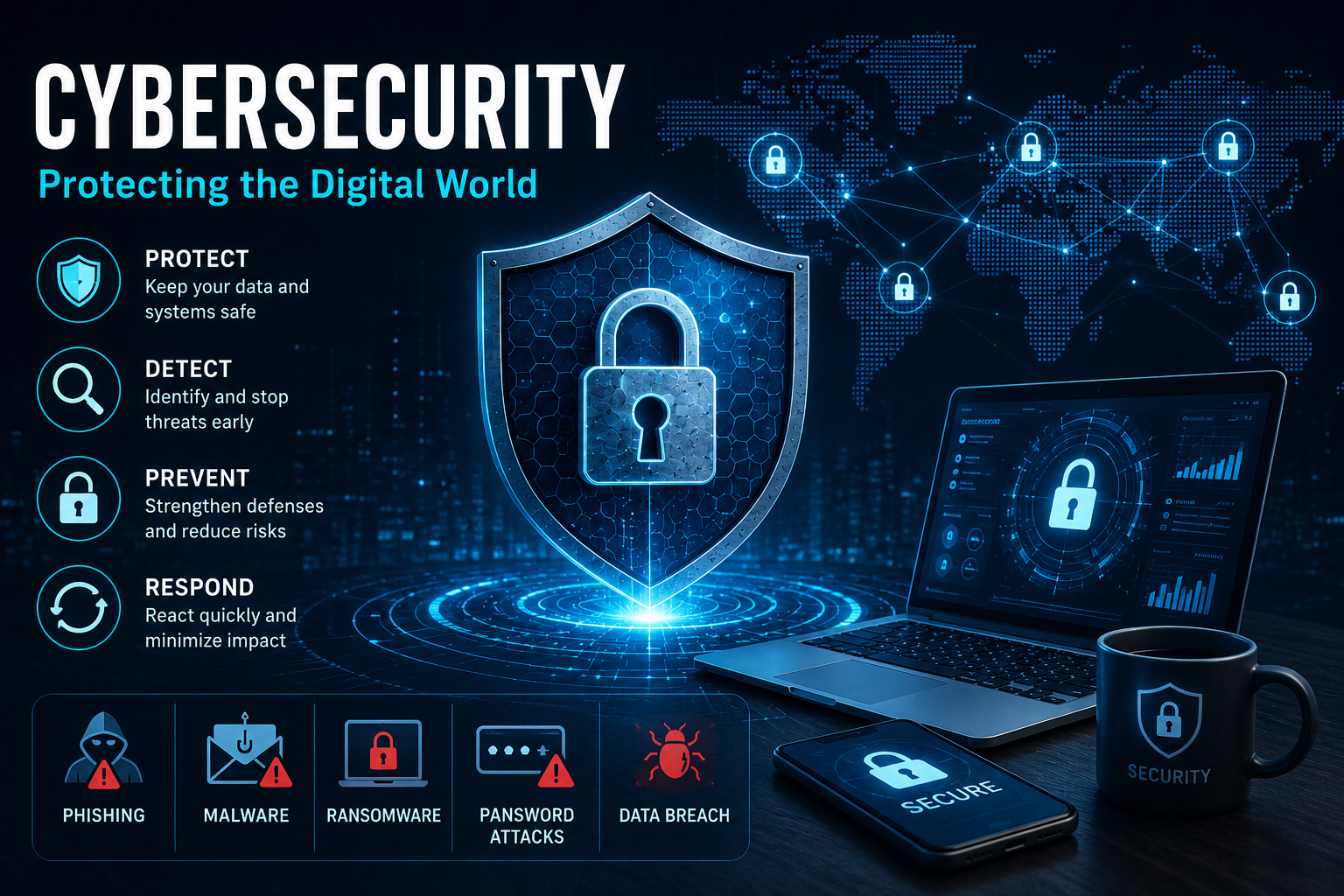
The internet has transformed the way people communicate, work, shop, study, and manage their businesses. However, as our dependence on digital technology grows, so do the risks associated with it. Cyberattacks, data breaches, identity theft, malware, and online scams can affect individuals, companies, and governments around the world.
Cybersecurity has therefore become one of the most important areas of modern technology. It involves the technologies, processes, and practices used to protect computers, networks, applications, and data from unauthorized access and digital threats.
What Is Cybersecurity?
Cybersecurity is the practice of protecting digital systems and information from cyber threats. These threats can target personal devices, business networks, websites, cloud platforms, and large government systems.
Cybersecurity focuses on several key areas, including:
- Network security
- Data protection
- Cloud security
- Application security
- Identity and access management
- Endpoint security
- Security monitoring
- Incident response
The goal is not only to prevent cyberattacks but also to detect threats quickly and reduce their potential damage.
Why Is Cybersecurity Important?
Almost every modern organization depends on digital systems. Businesses store customer information, financial records, employee data, and confidential documents electronically.
A successful cyberattack can result in financial losses, stolen information, operational disruption, and damage to a company’s reputation.
For individuals, cybersecurity is equally important. Personal information such as passwords, banking details, photographs, and social media accounts can become targets for cybercriminals.
Strong cybersecurity practices help reduce these risks and create a safer digital environment.
Common Types of Cyberattacks
Cybercriminals use many different techniques to attack systems and users.
1. Phishing
Phishing is one of the most common cyber threats. Attackers send fraudulent emails, messages, or websites designed to trick people into revealing sensitive information such as passwords or financial details.
Phishing attacks often imitate legitimate companies, banks, delivery services, or online platforms.
2. Malware
Malware is malicious software designed to damage systems, steal information, or gain unauthorized access. Viruses, spyware, trojans, and ransomware are examples of malware.
Users can reduce malware risks by keeping software updated and avoiding suspicious downloads.
3. Ransomware
Ransomware is a type of malware that can prevent users from accessing their files or systems. Attackers may demand payment in exchange for restoring access.
Organizations often use backups, security monitoring, network controls, and employee training to reduce ransomware risks.
4. Password Attacks
Weak or reused passwords can make online accounts easier to compromise. Attackers may use automated techniques to guess passwords or exploit credentials exposed in previous data breaches.
Using unique passwords and multi-factor authentication can significantly improve account security.
The Role of Artificial Intelligence in Cybersecurity
Artificial Intelligence is becoming an important technology in cybersecurity.
AI systems can analyze large amounts of security data and identify unusual patterns. For example, an AI-powered security system may detect unusual login behavior, suspicious network traffic, or potentially malicious files.
Machine learning can also help security teams prioritize alerts and identify threats more efficiently.
However, AI can also be used by attackers to create more sophisticated scams and automated attacks. This means cybersecurity professionals must continuously improve their defensive technologies.
Cloud Security
Cloud computing has become essential for modern businesses. Companies use cloud platforms to store data, run applications, and provide online services.
As more organizations move their operations to the cloud, cloud security has become increasingly important.
Organizations need to protect cloud accounts, control user permissions, encrypt sensitive information, monitor activity, and properly configure cloud services.
A secure cloud environment requires both technology and good security practices.
Cybersecurity for Businesses
Businesses of every size can become targets of cyberattacks. Small companies are not necessarily safe simply because they have fewer employees or less data.
A strong cybersecurity strategy can include:
- Regular software updates
- Employee security training
- Multi-factor authentication
- Strong password policies
- Data backups
- Network monitoring
- Access controls
- Security testing
- Incident response plans
Employee awareness is particularly important because many cyberattacks begin with human mistakes, such as clicking suspicious links or sharing confidential information.
Cybersecurity Careers
The growing number of digital threats has increased demand for cybersecurity professionals. People interested in technology can pursue careers such as cybersecurity analyst, security engineer, penetration tester, security consultant, cloud security specialist, and incident response analyst.
Important skills for cybersecurity careers include networking, operating systems, programming fundamentals, security tools, risk management, and problem-solving.
Certifications and practical projects can also help individuals demonstrate their technical knowledge.
The Future of Cybersecurity
Cybersecurity will become even more important as technologies such as artificial intelligence, cloud computing, the Internet of Things, and connected devices continue to expand.
Future security systems are likely to use more automation and AI to identify threats quickly. At the same time, cybercriminals may develop new methods to attack organizations and individuals.
This ongoing competition between attackers and defenders means cybersecurity will remain a constantly evolving field.
Conclusion
Cybersecurity is a fundamental part of the modern digital world. As individuals and organizations increasingly depend on technology, protecting digital systems and personal information becomes more important.
From phishing and malware to ransomware and sophisticated AI-powered attacks, cyber threats can take many forms. Strong security practices, advanced technologies, employee awareness, and continuous monitoring can help reduce these risks.
For businesses and individuals alike, cybersecurity is no longer optional. It is an essential part of using technology safely and responsibly in the digital age.

Leave a Reply